Paper transparency
Support paper and notebook programs with sourcing notes, format rationalization, and reduced duplication across departments.

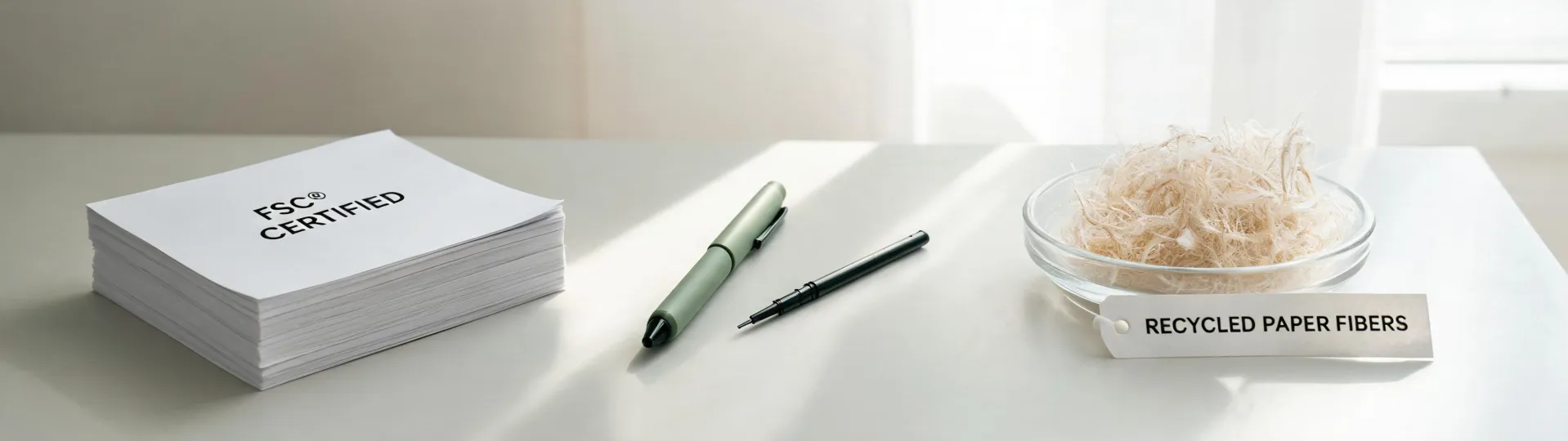
Sustainability loop
Rhodia frames sustainability as a working discipline: paper sourcing, refill continuity, waste reduction, packaging choices, and buyer documentation must be clear enough for teams to compare.
Stationery is often considered low risk because each item is small. At organizational scale, however, notebooks, pads, writing tools, classroom materials, and art supplies create meaningful paper consumption, packaging flow, and replacement volume. Rhodia helps buyers ask practical sustainability questions before they approve a category. Is the notebook paper source documented? Can the writing instrument program reduce disposable churn through refill planning? Are classroom and studio materials being selected with age suitability, packaging efficiency, and clear usage notes in mind? The goal is not to make absolute environmental claims. The goal is to give procurement teams comparable evidence so they can choose a better-controlled mix and review it each year. This approach also helps category owners discuss sustainability with finance and operations colleagues in concrete terms, because every improvement is tied to an item family, a purchasing rule, or a measurable reorder habit.
Commitment goals
Support paper and notebook programs with sourcing notes, format rationalization, and reduced duplication across departments.
Favor writing instrument choices that can be maintained through refills, approved replacements, and controlled office standards.
Use annual category reviews to compare consumption, dead stock, substitution rates, and packaging assumptions.
Progress indicators
Send the product categories you buy today and the documentation your team needs. Rhodia will help identify where paper sourcing, refill planning, and pack-count decisions can become clearer.
Review my program