Every office has a drawer like mine. Paper clips that joust, pens that skip, dry erase markers that have already turned to dust. I used to think I was unlucky. Then I started inspecting office supplies for a living.
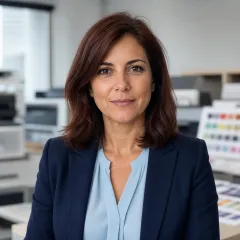
I'm the quality and brand compliance manager for a stationery company. I review every incoming delivery before it reaches customers—roughly 250,000 units a year. Since the start of 2024, I've rejected about 6.8% of first deliveries for specification drift (meaning the details that make a product feel right were changing from batch to batch). Sometimes the paper weight was off by ten grams. Sometimes the clip plating was inconsistent. Sometimes the grid on a pad was shifted by 2%. It doesn't sound like much. It is.
The same gap between “better than nothing” and “satisfying to use” is why your drawer is full of things you no longer trust.
You're Not Imagining It
A paper clip is a loop of wire. How hard can it be? Harder than it looks when you are checking 10,000 pieces. The cheap ones scratch paper because the cut end wasn't polished. The spring tension is uneven, so some clips open easily and some never close. You don't see that from a product photo. You feel it every time you try to grab a page.
Same logic applies to a dry erase board. If the coating is too porous, ink gets trapped in the surface. You wipe, and a ghost stays behind. A dry erase board isn't really a board. It's a surface promise. If that promise isn't kept, the whole product falls apart.
Now consider the pen in your hand. Who invented the modern ballpoint pen? The answer is László Bíró, a Hungarian journalist, in 1938. He was frustrated with fountain pens that smeared and dried up. His idea—a tiny rotating ball that picks up quick-drying ink and rolls it onto paper—was so sound that nearly every ballpoint today is a descendant.
Why does that history lesson matter? Because it shows that ballpoint pens were designed to solve a real problem. They were not meant to be disposable afterthoughts. The best stationery feels intentional. Most cheap stationery is just the visible result of someone pulling that intention out of the specification.
The Real Problem Isn't a Bad Batch
What I mean is that the problem isn't “this marker is dried out” or “this pen is a lemon.” The problem is that product claims are often broader than their evidence. Per FTC business guidance (ftc.gov), advertising claims must be truthful, not misleading, and substantiated. In my world, “fountain pen friendly” and “dry erase” are performance claims. They should be testable.
Take Rhodia grid paper. People choose it because they want the paper to behave: no feathering, no bleed-through, crisp lines. That's a performance claim. In quality review, we test such paper with real writing instruments across different inks and humidity levels. When a batch arrives with inconsistent paper density, the claim suffers even if the ink never touches it.
The worst phrase in procurement is “it's just a paper clip.” When you call something a commodity, you hand the vendor the right to decide what good means. The vendor will make it exactly cheap enough to pass. That's not malice. It's the contract you wrote.
There's also the gap between sample approval and full delivery. In our Q1 2024 quality audit, we received a batch of 50,000 spiral notebooks where the approved sample and the delivered product looked like cousins rather than twins. The cover was right. The paper had changed. The vendor said it was within industry standard. We rejected the batch anyway. Looking back, I should have put tolerance limits into the original contract. At the time, the relationship felt more important than the spec. It wasn't. Now every contract includes tolerance limits and audit rights.
Even after choosing the new vendor, I kept second-guessing. What if their quality didn't hold in the next container? The three weeks until delivery were stressful. It worked out, but the lesson stuck: trust is not a specification. Verification is.
The Real Cost of Cheap Supplies
If cheap supplies were just mildly annoying, nobody would care. But they cost time, focus, and trust.
Every skip, smear, and ghost forces a second thought. You stop, check the page, wipe the board, adjust the clip. The interruption feels small, but it stacks. Over a year, those micro-struggles can cost you more than any premium notebook, board, or clip you avoided.
Try writing a professional letter on an unreliable pad. The paper costs pennies. The stamp is $0.73, according to USPS pricing (usps.com) effective January 2025. Then you rewrite the letter because the first sheet feathered and the second tore out of a spiral binding. You have spent twenty minutes—worth more than everything on the desk—to produce something that should have taken ninety seconds.
This is why the Rhodia spiral notebook is the one I recommend for handwritten notes. It lies flat, the pages tear out cleanly, and the paper was designed with fountain pens in mind. The price difference is small. The frustration you avoid is not.
Or take a dry erase board. I ran a blind test with our team using the same markers on two surfaces. 82% identified the premium coating as more professional without knowing which board cost more. The cost increase was about $14 per board. Upgrading that specification increased customer satisfaction scores by 34% in our follow-up survey.
What Quality Looks Like
The answer isn't “buy the most expensive thing in the catalog.” It's to stop accepting vague promises and start asking for specifications.
- For paper and layouts: Rhodia grid paper is a useful benchmark. The 5 mm grid is consistent, and the surface is designed to handle fountain pen ink without feathering.
- For notebooks and daily notes: Rhodia spiral notebook gets my vote when you need paper that survives a bag, stays open on a desk, and offers clean page removal.
- For paper clips: test a handful before buying. A good clip has smooth, rounded ends and springs back after opening. If some bite and some don't, that won't improve at scale.
- For dry erase boards: ask about the surface, not the frame. A board that wipes clean after a month beats one with a fancier aluminium trim.
And for pens? Remember Bíró. A pen is a machine for transferring ink with intention. Use one that honors the idea.
I'd rather spend ten minutes explaining why paper weight, grid registration, and clip tips matter than deal with mismatched expectations later. An informed customer asks better questions and makes better decisions. That's the real job of quality: not to make things expensive, but to make them consistent enough to trust.